

Guests visiting Alaska often arrive with expectations shaped by skiing in the Rockies or other continental climates. While those experiences translate in many ways, Alaska operates under a different system—one defined by proximity to the ocean, high precipitation, and rapid change.
This is known as maritime skiing, and understanding how it works helps explain why Alaska delivers such deep snow, expansive coverage, and world-class terrain.
A Snow Climate Shaped by the Ocean
Alaska’s coastal mountain ranges sit directly in the path of moist air moving inland from the Gulf of Alaska. When those air masses rise over steep terrain, they release significant amounts of precipitation in short periods of time.

Sometimes that precipitation falls as snow from valley floor to summit. Other times it may fall as rain at lower elevations while remaining snow higher up. Both are normal features of a maritime snow climate.
The result is a snowpack that builds quickly, is very deep, and changes rapidly.
Rain during the winter months often raises questions. While it can temporarily affect surface conditions at lower elevations, it’s easy for us to ski above the rain line. Within our heli-ski tenure, we operate across elevations ranging from roughly 200 to 7,000 feet. If rain reaches 2,000 feet—or even higher—we move to higher elevations where precipitation is falling as snow. Many of Alaska’s best conditions follow storms where it rains at sea level or above.
This creates a challenge for guests that are trying to get a read on conditions. Because elevation is such a determining factor, reports from ski resorts and online weather applications often don’t paint an accurate picture of what is happening in the heli ski terrain.

Rapid Change Is the Norm
One of the defining characteristics of maritime skiing is how quickly conditions evolve. In Alaska, changes happen on the scale of hours and days rather than weeks.
A zone that skis poorly one day may be excellent the next. Storms can fill in terrain overnight. Sun and wind can also influence conditions just as quickly.
This variability is different from continental climates, where conditions tend to develop more gradually and follow predictable seasonal patterns. In Alaska, timing is both important and completely unpredictable. Whether you choose to visit in February, March or April, there will be a strong element of luck determining your conditions. For further information on this, see our blog post the best time to heli ski.
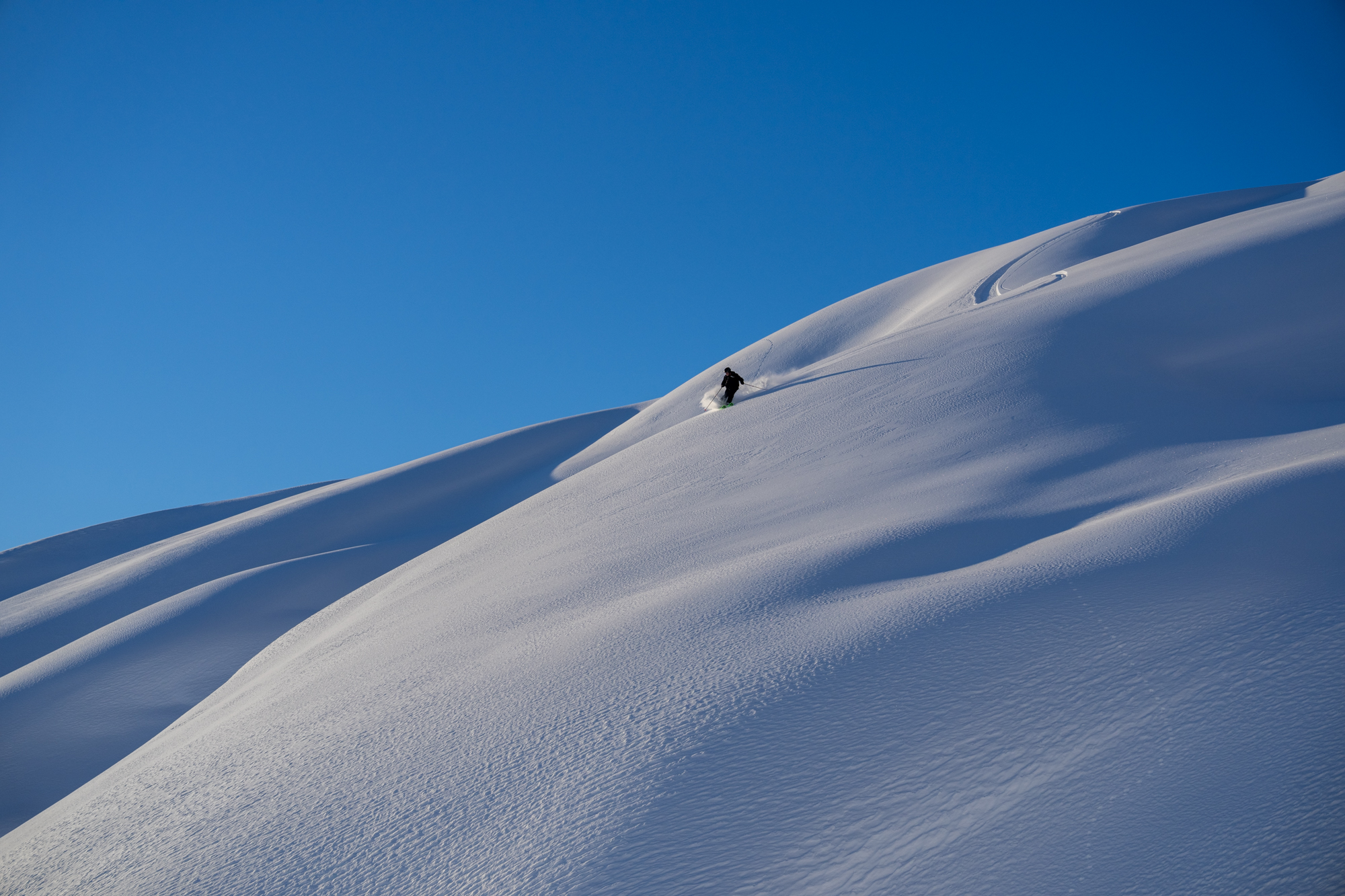
Not Better or Worse—Just Different
Maritime and continental snow climates each have their strengths. Continental climates are colder and drier, with slower snowpack development and longer-lasting weak layers. Maritime climates receive more precipitation, experience more frequent resets, and tend to stabilize more quickly.
Alaska’s system is dynamic, powerful, and constantly evolving. It requires careful observation, decision-making, and a willingness to adapt to what the mountains are offering each day.
Why Alaska Delivers
This combination of heavy snowfall, frequent resets, and dense snow is what allows Alaska to support:
-
Deep mid-winter coverage
-
Steep, complex terrain
-
Consistently skiable glaciers and alpine zones
Understanding maritime skiing helps set expectations—and highlights why Alaska remains one of the most rewarding places to ski when conditions align.


